ServicesReverse Mortgages
Reverse Mortgages in Dawsonville, GA
If you are 62 or older and have built real equity, a reverse mortgage can turn part of it into cash or a credit line with no required monthly mortgage payment. We show you the payout, the fees and how the balance grows, in writing, before you commit.
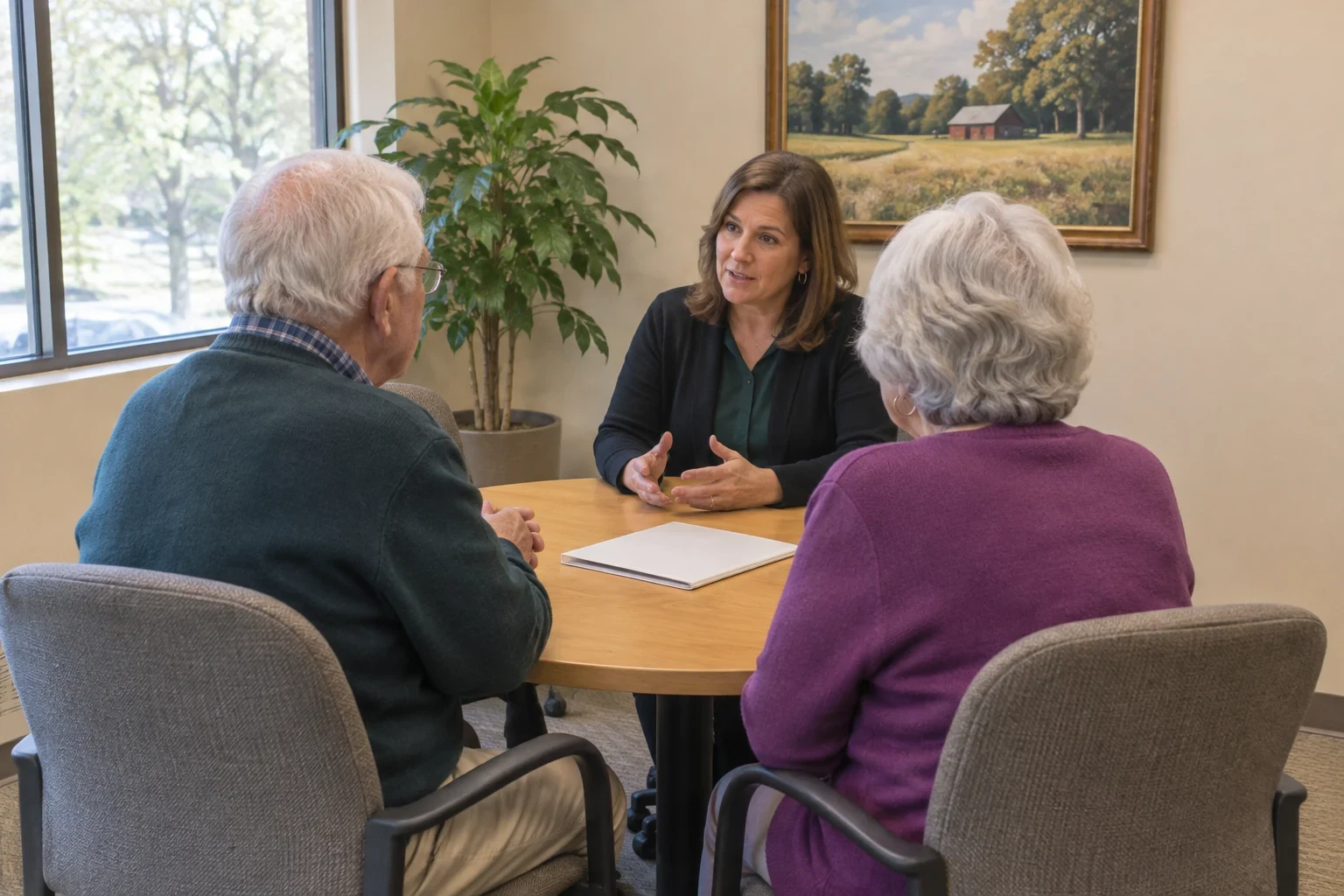
How a reverse mortgage works, and who it fits
Most reverse mortgages are Home Equity Conversion Mortgages, or HECMs, a federal program run through the FHA. Instead of you paying the lender each month, the lender pays you. Interest and the mortgage insurance premium are added to the loan balance, and the balance comes due when the last borrower sells, moves out for more than 12 consecutive months or passes away.
It tends to fit retirees who plan to stay put, want to retire an existing mortgage payment, or want a growing line of credit as a cushion. It fits poorly if you expect to move within a few years, because the costs are front-loaded. In that case a home equity loan, a HELOC or a standard mortgage refinance may cost less, and we will tell you so.
Before you sign anything, we put every charge in writing and explain why it is there.
What we handle on a reverse mortgage
- Principal limit calculation
- Your borrowing amount comes from the age of the youngest borrower or eligible non-borrowing spouse, the expected interest rate and the appraised value up to the FHA lending limit. We run those numbers and show how each input moves the result.
- Payout option comparison
- A HECM can pay a lump sum, monthly payments for life or a set term, a line of credit, or a mix. A fixed rate requires a single lump-sum draw, while an adjustable rate opens the line of credit, whose unused portion grows over time. We lay these side by side.
- HUD counseling coordination
- Federal rules require a session with an independent HUD-approved counselor before you apply. We give you the list of agencies and make sure you go in with your numbers in hand.
- Financial assessment prep
- Lenders review credit history and residual income to confirm you can keep up with taxes, insurance and upkeep. If the review falls short, part of the proceeds may be held in a Life Expectancy Set-Aside to pay those bills. We explain that possibility at the start, not at underwriting.
- HECM for Purchase
- Downsizing or relocating? A reverse mortgage can fund part of a new primary residence so you own it with no monthly mortgage payment. We line up the timing with your purchase contract and closing date.
Signs a reverse mortgage deserves a look
A mortgage payment strains fixed income
If Social Security and pension income barely cover a remaining mortgage payment, a HECM can pay off that loan and end the required monthly payment.
Most of your wealth is in the property
Plenty of retirees around Dawsonville and Dahlonega have paid down their loans over decades but hold little cash. Converting part of that equity can cover expenses without selling.
You want a standby credit line
The unused HECM line of credit grows at the loan's interest rate plus the mortgage insurance rate. That gives later years a larger reserve to draw on.
You plan to stay many years
Closing costs are paid once. The longer you live there, the more years those costs are spread across and the better the math works.
You want to rest retirement accounts
Drawing from the line during down markets can leave investment accounts untouched while they recover. Check that strategy with your tax or financial adviser.
What moves reverse mortgage costs
Reverse mortgage costs are mostly set by federal rules and the appraised value, with a few items that vary by lender. Each one appears on your Loan Estimate, and we go through the line items with you before you apply. Nothing new gets added later.
Appraised value and lending limit
The upfront mortgage insurance premium and the cap on the origination fee are both calculated from the property value, up to the FHA limit. A higher value raises both.
Rate type and margin
Fixed and adjustable HECMs price differently. On an adjustable loan, the margin affects both the interest that accrues and how much you can borrow.
Existing mortgage payoff
Any current mortgage must be paid off from proceeds at closing. A large payoff can use much of what you are allowed to draw in the first year.
Third-party charges
Appraisal, title insurance, recording fees and the counseling session are paid to others. We list each one by name on the written estimate.
How much you draw
Interest and the annual mortgage insurance premium accrue monthly only on what you have taken. Drawing less keeps the balance lower.
From first call to closing
- 1
Free consultation
By phone or video, a loan officer reviews ages, property value, any existing mortgage and what you want the money for. You get a plain answer on whether a reverse mortgage fits or another loan does.
- 2
Written estimate and counseling
We send a written breakdown of the principal limit, fees and payout options. You then complete the HUD counseling session and receive the certificate the application requires.
- 3
Application, appraisal and review
We take the application, order an FHA appraisal and run the financial assessment. The appraiser also flags any property condition items that must be addressed as part of the loan.
- 4
Closing and rescission period
You sign at closing, then have three business days to cancel because the loan is on your primary residence. Funds are released after that window ends.
Reverse mortgage questions
Will the lender own the property?
No. You keep title, just as with any mortgage. You must live there as your primary residence, pay property taxes and hazard insurance, and keep it maintained. Falling behind on those obligations is the main way a reverse mortgage goes into default.
What happens to my heirs?
When the loan comes due, heirs can repay the balance and keep the property, sell it, or turn it over to the lender. HECMs are non-recourse. If the balance is more than the property is worth, heirs who want to keep it can pay 95 percent of the appraised value, and no one owes the difference out of pocket.
What if my spouse is younger than 62?
An eligible non-borrowing spouse can be named in the loan documents and, if the conditions are met, remain in the property after the borrower dies. The younger age lowers the principal limit, and we show that effect in writing.
Can I get one with a mortgage still on the property?
Yes, as long as the proceeds cover the payoff at closing or you bring cash to close the gap. Retiring an existing payment is one of the most common reasons people choose a HECM.
Does it affect Social Security or Medicare?
Loan proceeds are not income, so Social Security and Medicare are not affected. Need-based benefits such as Medicaid or SSI can be affected if drawn funds sit in an account past the month you receive them, so it helps to plan draws around that.
See your reverse mortgage numbers on paper
Tell us the ages of everyone on title and a rough property value, and a loan officer will go through your options. We work with borrowers in Dawsonville, Jasper, Cumming and nearby towns by phone, video or at our office.